Mushfiqur Rahman Saad.
Applied researcher · Human-centered design
Bangladesh ↔ Malaysia

Mushfiqur
Rahman Saad.

I’m an applied researcher who develops technologies around people’s needs. My work brings together AI, human-centered design, and practical engineering, with a focus on the environment, education, and resource-constrained settings.

My research interests
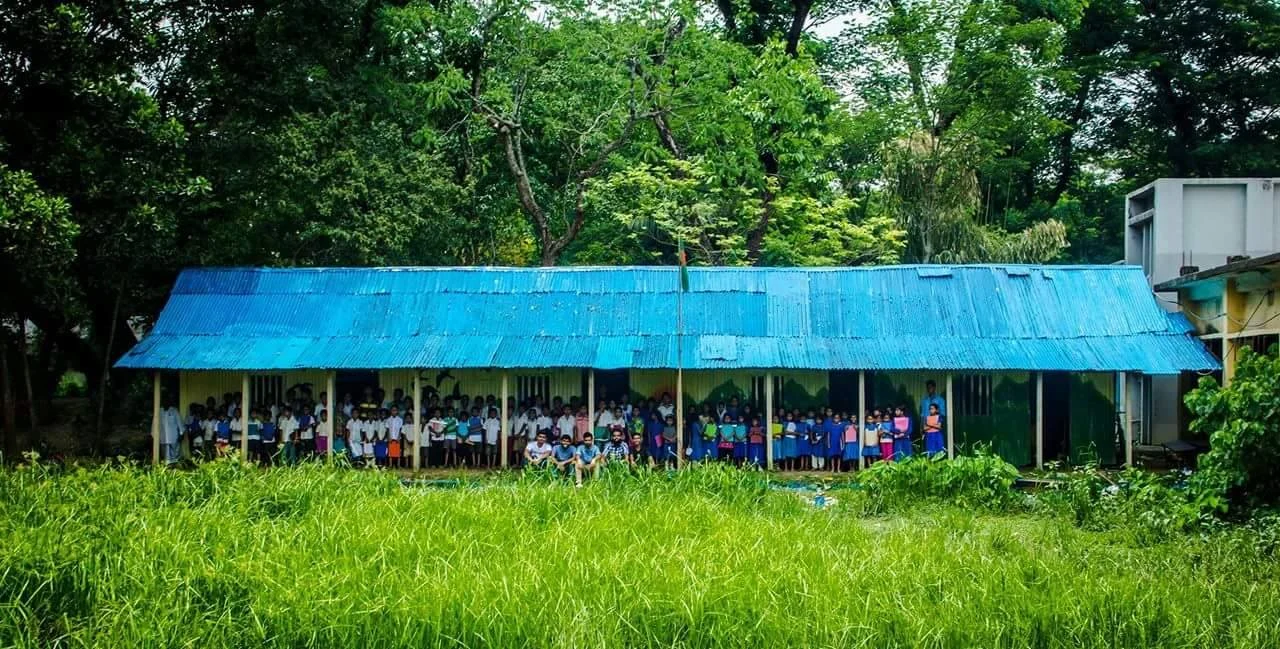
Students and teachers gathered outside the blue-roofed school in Thanchi, surrounded by trees and grassInnovation school · Thanchi, Bandarban
My work in science education at the innovation school in Thanchi.Bandarban, Bangladesh
Portrait of Mushfiqur Rahman Saad
Mushfiqur Rahman Saad · Applied researcher & designer
About me

Research &
practice

My work connects research with implementation. I use human-centered design and design thinking to understand a problem, explore possible responses, and develop systems that can be tested in practice.

I began working on community initiatives while I was still in high school. Since then, I have founded youth-led organizations, produced protective equipment during COVID-19, and established an innovation school in Thanchi. Working across these settings has shaped my interest in how people’s needs, knowledge, and available resources inform the design of a technology.

For my master’s research at Universiti Kebangsaan Malaysia (UKM), I brought that experience into ML², an AI-enabled platform for plastic litter classification and citizen science. My contribution spans research design, the dataset, the application, and its backend.

Today, I also work on emergency response drones and AI systems for factories employing thousands of people. I bring experience across software, physical prototyping, and community engagement to the same question: what does it take to make a technical idea useful in the setting it is intended for?

Human-centered designDesign thinkingHuman–AI interactionResearch & implementation
Questions that guide my work

Research interests

I want to develop AI applications that help people understand their environment, learn, and respond to local needs. Three interests guide the research I want to pursue.

AI in resource-
constrained settings

How can AI remain useful when data, infrastructure, or specialist support are limited? I’m interested in the design decisions that make a system practical to use and maintain, and in how people understand and act on its outputs.

Current applications ↗

Environmental
impact

How can people and AI work together to document and respond to environmental problems? ML² brings this question into citizen science. My work on floating treatment wetlands also connects my research interests to physical interventions and the conditions at a site.

Environmental research ↗

Education &
participation

How can learners take an active role in creating technology? My work in Thanchi and community electronics workshops informs my interest in learning through design, and in how AI could support education where access to tools and teaching is limited.

Education & community ↗
01 / Learning to frame a problem

Where it began

My approach to research began with community work: looking closely at a problem, understanding who it affected, and working with others to develop a response.

As a high-school student, I worked with other young people through Project Be to develop community initiatives. In 2015, our team created Khoj, an Android application for reporting missing children and other missing people.

We had noticed how quickly missing-person reports could disappear in a social-media feed. Khoj brought reports and sightings into a shared system, connected with Facebook and a 92.4 FM radio partner to help information reach a wider audience. The design problem extended beyond the app: it included how a report would be submitted, shared, and seen by someone who could help.

Read the 2015 Khoj interview ↗

TEDxYouth@ISD · Published 2017

How to Find the
Right Problem to Solve

In my TEDx talk, I shared the early community work behind Project Be and Wizkit. Its central question remains part of my research practice: deciding which problem to address, and whose needs should shape the response.

Watch the TEDx talk

Official recording from TEDx Talks. Open on YouTube ↗

02 / Public-health response · 2020–2021

COVID-19
innovation

During COVID-19, I used rapid prototyping and small-scale fabrication to respond to an urgent need for protective equipment.

I co-founded Wizkit with Bushra E Anjum to connect science education with research and product development. When our teaching spaces closed during COVID-19, we redirected that practical experience toward making equipment for healthcare workers.

During the pandemic, I produced 7,000 face shields from a home lab and made more than 1,200 powered air-purifying respirators (PAPRs) from customized scuba masks. This work required moving from a prototype to repeated production, bringing together design, fabrication, and practical problem-solving within the resources available.

An earlier milestone was documented by The Daily Star in August 2020, when Wizkit had provided 3,500 face shields free to doctors and other healthcare workers.

My related research on a low-cost UV disinfection robot was published at the IEEE World AI IoT Congress in 2021. This work connected a research question about affordable equipment with product design, electronics, and physical prototyping.

The same concern with access runs through my education work: giving young people opportunities to use these tools and develop responses to problems in their own communities.

03 / Science education · An ongoing commitment

Education &
Community

Education is one of my core commitments as a researcher. It gives me a setting in which to explore how people learn through making, and how the design of a tool or activity can support their participation.

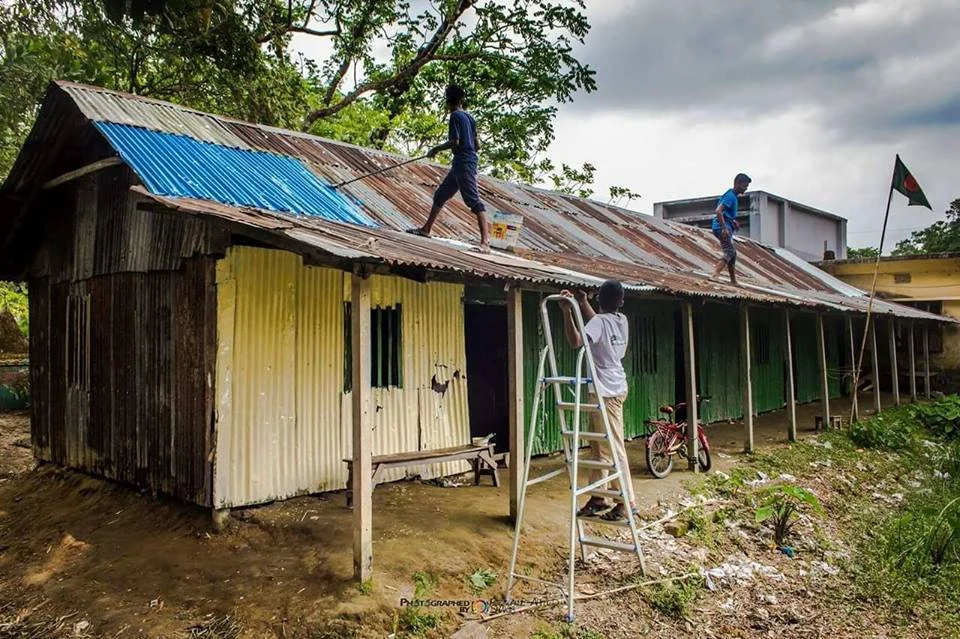
People working on the roof and exterior of the school building in Thanchi
Working on the school building · Thanchi, Bandarban
Thanchi, Bandarban

Science education
in the hills

I founded an innovation school in Thanchi, one of Bangladesh’s remote regions, through my work with Wizkit. Here, practical science education means making space for learners to experiment, build, and explore ideas with their own hands.

In a June 2025 interview with IDLC, my co-founder Bushra described our science clubs and interactive kits reaching nearly 90 Marma students. Feedback from learners in settings with limited resources also informs the development of our educational products.

For me, this is an important connection between human-centered design and education: learners’ experiences can shape the tools they use. It also informs my interest in AI applications that support learning within the resources a community has.

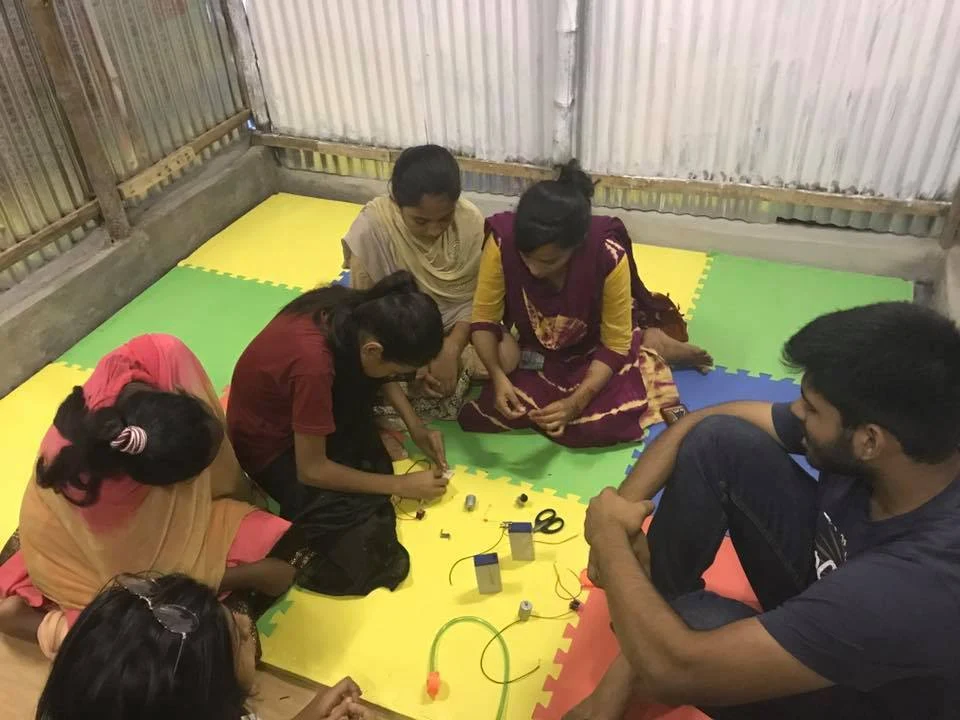
Participants working together with simple electronics in a hands-on workshop
Learning electronics through practical experiments

Making science relevant

In a low-income community in Dhaka, I trained girls to build fire alarms using simple circuits. Connecting electronics with a concern in their surroundings made the activity a practical introduction to problem-solving. This experience informs how I think about educational tools: their purpose should be meaningful to the learner.

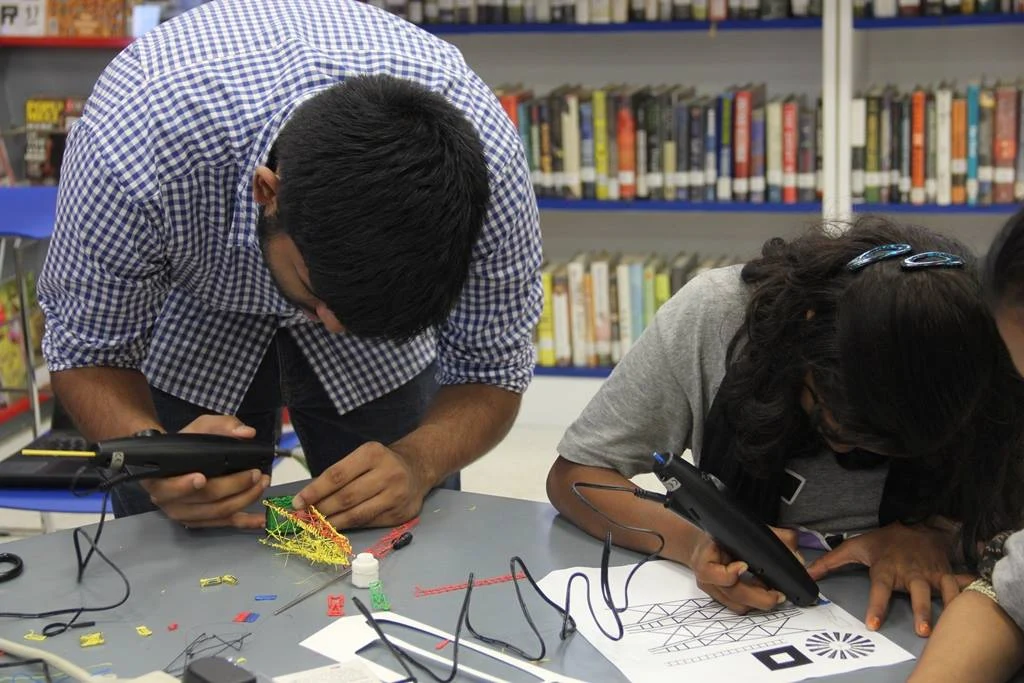
Two people working on designs and materials during a fabrication workshop
Design and fabrication workshop

Learning through design

Through maker training and 3D-printing workshops, I help learners move from understanding a concept to making something with it. Designing these learning experiences brings together my skills in project design, electronics, and fabrication with a continuing interest in how people learn by developing and trying out their own ideas.

Community education led me to think more deeply about participation: how people contribute knowledge, and how a system can make that contribution easier. These questions also inform my work in citizen science.

04 / Environmental research · UKM

Environmental
research

At Universiti Kebangsaan Malaysia, I brought AI, human-centered design, and community participation together around a research problem: helping citizen scientists document plastic litter.

Machine Learning for Mitigating Litter
ML2
Community
contributions
AI-assisted
classification
Shareable
research data
~8,000Annotated images used in the published study
UKM
Research / 2025
Citizen science × Machine learning

AI for plastic litter
and citizen science

For my master’s research, I designed Machine Learning for Mitigating Litter (ML²), an AI-enabled web application that helps citizen scientists classify plastic waste and contribute to a shareable dataset.

My contribution spans research conceptualization and methodology, dataset design, the application interface, backend development, and analysis. Our 2025 paper in Expert Systems with Applications describes a model developed with approximately 8,000 locally sourced, annotated images.

The interface, classification model, and data pipeline are parts of the same research problem: supporting a person’s contribution while producing useful data. ML² reflects how I work across a project, connecting research methods with the software and interactions needed for implementation.

My role: Conceptualization · Methodology · Software · Analysis · Research writing

Related environmental practice / Bangladesh

Floating treatment
wetlands

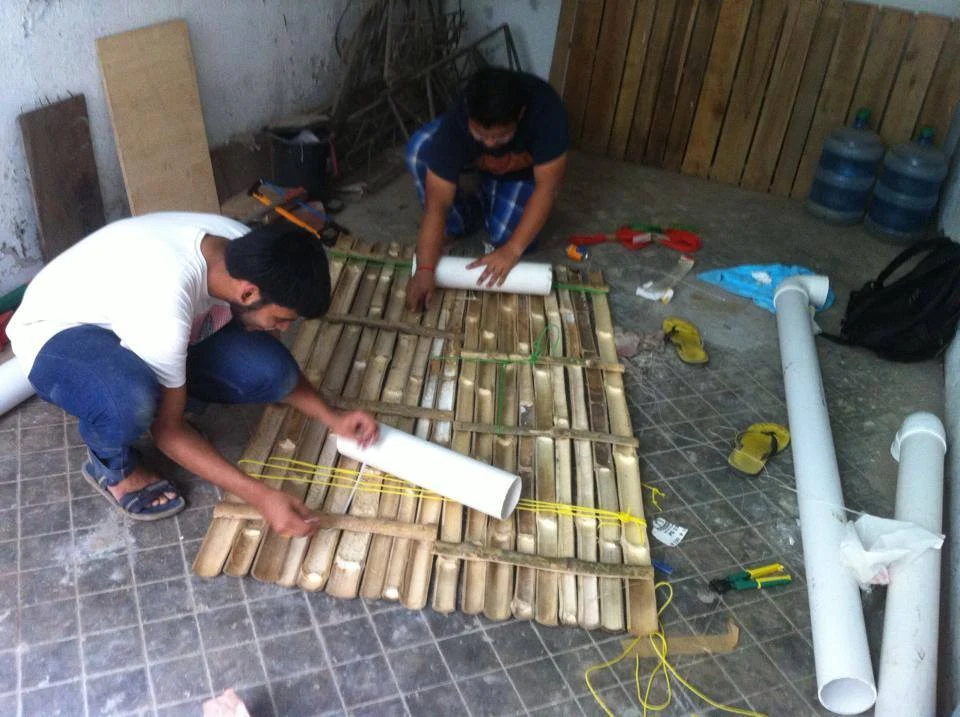
My environmental work also includes contributing to floating treatment wetlands in Bangladesh. This experience involves physical structures, plants, and the conditions at a site, bringing environmental concerns into the practical decisions of project design.

Together with ML², this fieldwork informs my interest in environmental research that connects data with action. It keeps questions of materials, maintenance, and local conditions in view as I develop digital systems.

Practice: Project design · Physical prototyping · Environmental application

Constructing the framework for a floating treatment wetland
Building the framework for a floating treatment wetland

Carrying a research idea into practice raises further questions about reliability, interpretation, and use. My current work in emergency response and industrial AI brings those questions into settings with different operational demands.

05 / Current work · Bangladesh

Research
in practice

I apply the same approach to emergency response drones and AI solutions for factories employing thousands of people: understand the need, design the system around its users, and work through the demands of implementation.

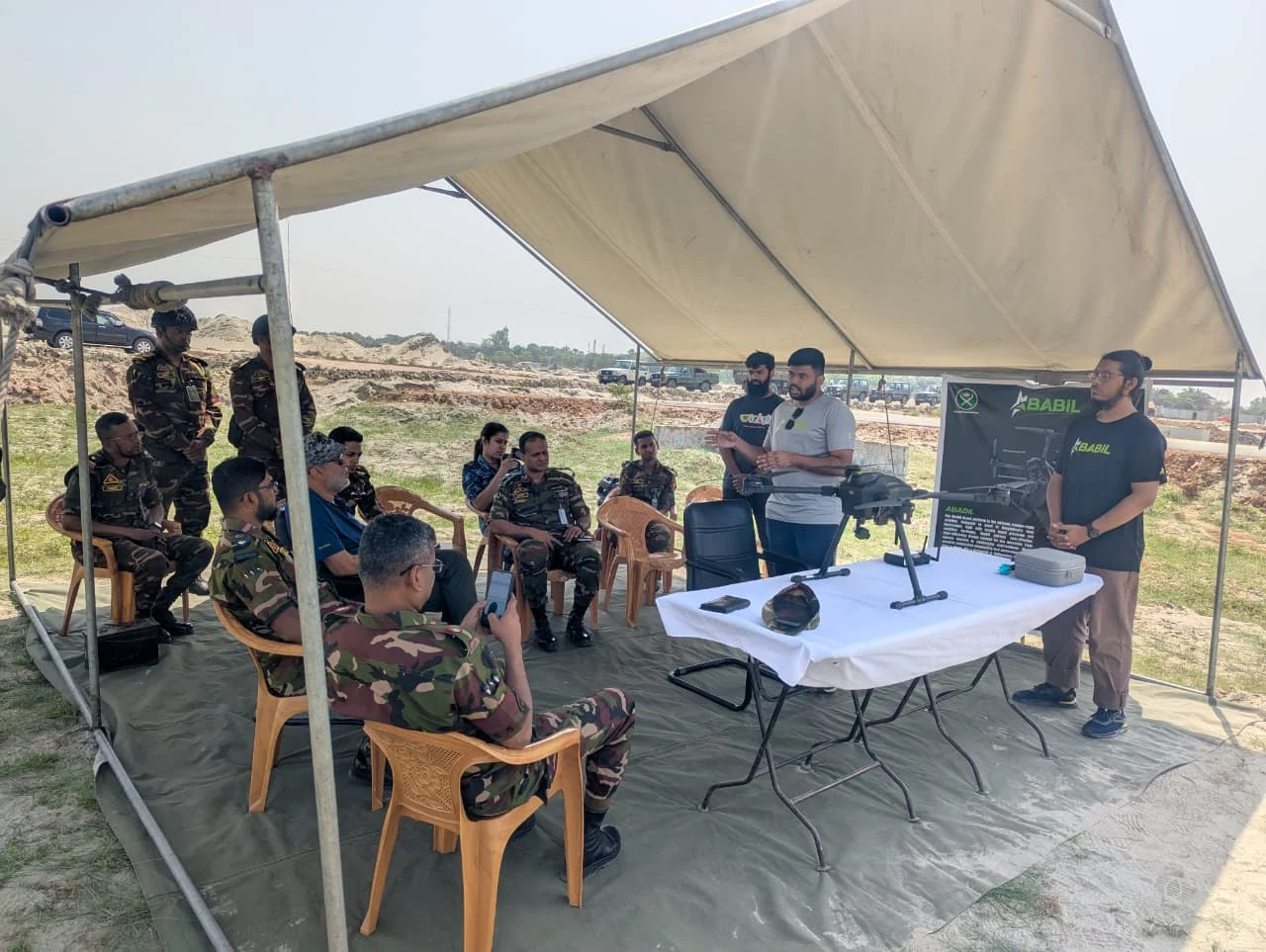
Saad and the Wizkit team demonstrating the Ababil drone platform outdoors
Presenting the Ababil drone platform
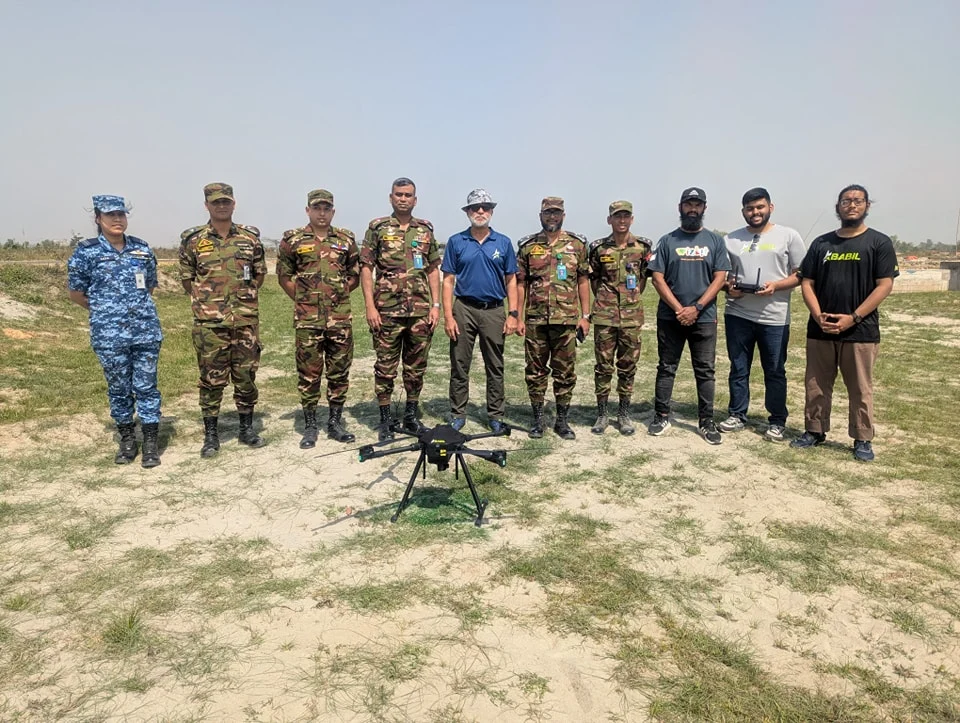
The drone project team and demonstration participants gathered with a drone
Drone platform demonstration · Bangladesh
Drones & emergency response

Emergency response
drones

My current drone work focuses on emergency response. At Wizkit, our team has developed Ababil, a modular drone platform designed in Bangladesh, extending our work in electronics, physical prototyping, and system integration.

This work draws on my experience in public-health response and physical prototyping. It brings me back to a research interest that runs through both: how technology can support people making decisions and working with limited resources in the field.

Project updates on LinkedIn ↗
AI for factories

AI for factory
operations

I work on factory automation for security and productivity in environments with thousands of workers. My role connects project design, software, and implementation, integrating AI into the systems and routines of a workplace.

These applications make human–AI interaction a practical concern. I am interested in how people interpret an output, decide when to rely on it, and act on it within their role. Working at this scale also brings the consequences of design decisions into focus.

Entrepreneurship

Companies I’ve founded

Alongside my research, I have founded companies to develop ideas into practical tools and systems. This work connects my experience in design and engineering with the ongoing demands of implementation.

  • Wizkit

    Co-founder
  • Wiztech

    Founder
  • Ababil UAS Solutions

    Founder
06 / How I work

Design &
methods

I work across problem framing, research design, prototyping, and implementation. Human-centered design helps me connect those stages to the people involved; design thinking gives me a way to explore alternatives and refine a response as I learn more about a problem.

Human-centered design & project design

I consider who a project is for, what they need to do, and what might prevent them from taking part. Community education, Khoj, and ML² have given me experience designing the process of participation alongside the tool itself.

Design thinking, 3D design & prototyping

I use prototypes to make an idea tangible and work through its practical constraints. My experience spans 3D design, electronics, fabrication, muscle-controlled wheelchair and sign-to-speech glove prototypes, and the production of protective equipment during COVID-19.

Human–AI interaction & system implementation

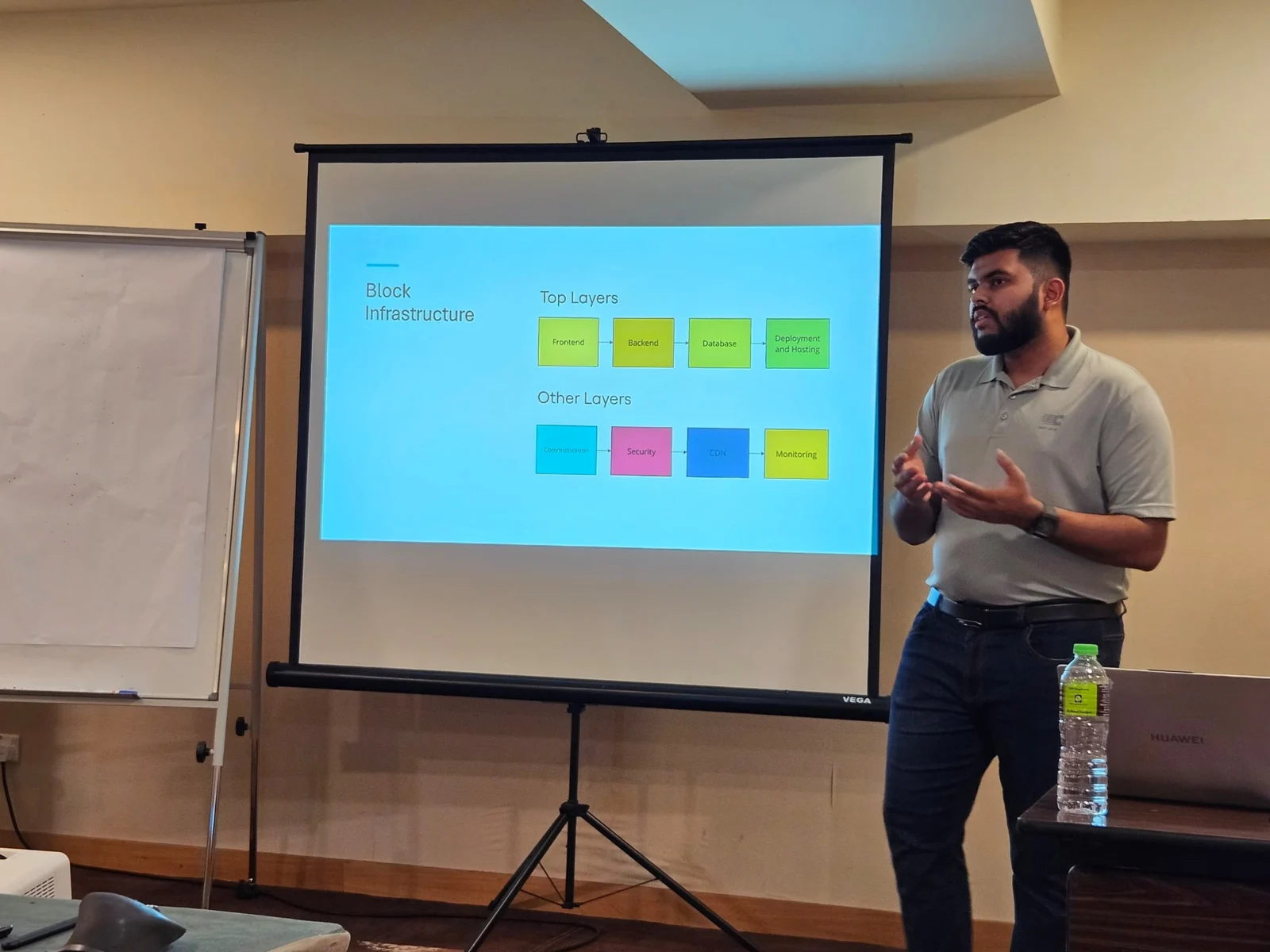
In ML², I designed both the application and backend, connecting citizen-science contributions with AI-assisted classification and a research dataset. My industrial work extends this experience to integrating AI within organizational workflows.

Visual design & research communication

I have designed dozens of logos and creative materials for university departments and organizations. This work informs how I communicate research and design interfaces, alongside my experience presenting technical systems and teaching through practical demonstrations.

Mushfiqur Rahman Saad presenting the architecture of an application and its backend systems
Presenting application architecture and system design
Visual identity

Logo design

I have designed logos for university departments and organizations. Each identity is an opportunity to communicate what a group stands for through a simple, recognizable mark.

Selected designs coming soon.
The images shown are placeholders.

07 / Academic work

Publications

2025

Empowering citizen scientists: A web app for plastic litter classification

Mushfiqur Rahman Saad, Nor Fadzilah Abdullah, Asma Abu-Samah & Rosdiadee Nordin
Expert Systems with Applications · Journal article

↗
2021

A Cost Effective UV Robot for Disinfecting Hospital and Factory Spaces for Covid-19 and Other Communicable Diseases

Md. Mushfiqur Rahman Saad & Md. Abdur Razzak
IEEE World AI IoT Congress · Conference paper · pp. 373–378

↗
ICTP

Leveraging the Power of Citizen Science and Machine Learning to Transform Low-Income Communities

Contribution in the Joint ICTP–IAEA school/workshop materials · Abstract

↗